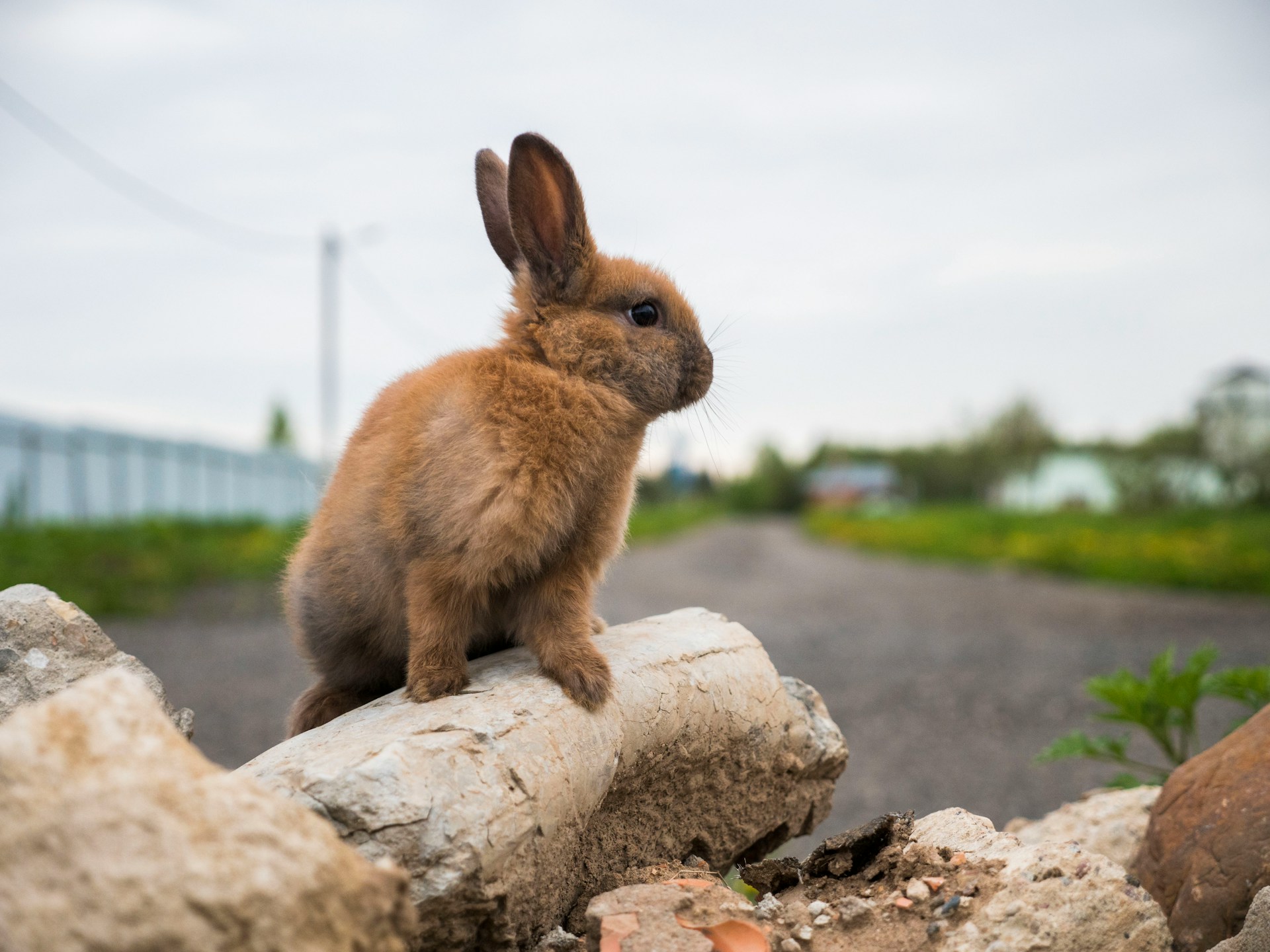
Richard Adams’ Watership Down (New York: Macmillan, 1972) is one of the classic works of xenofiction (the fiction set in strange cultures, real or imagined), placed as it is among and between the warrens of rabbits in the English countryside. Lapine, the language he sketches for his rabbits, is arguably the best naming language ever created, and is a minimalist virtuoso performance, a haiku of a language compared to the sonnet of Sindarin.
The following documentation of the language is derived from Adams’ own appendix to Watership Down, but is reconstructed as extensively as possible from the limited examples. All hypothetical reconstructions are preceded by an *asterisk.
Vocabulary from the sequel has been deliberately left out, as the point of this example is how much can be accomplished with how little. Lapine went a long way towards establishing the verisimilitude of the rabbits’ culture.
| Lapine | Plural | Etymology | POS | Translation |
|---|---|---|---|---|
| Crixa | proper noun | A crossroads, the center of Efrafa, located at the crossing point of two bridle paths. | ||
| Efrafa | proper noun | A warren founded by General Woundwort. | ||
| El-ahrairah | [< Elil + hrair + rah, “Enemies Thousand Prince” or “The Prince with a Thousand Enemies”.] | proper noun | The legendary rabbit folk hero. | |
| *eli | [Hypothetical reconstruction of the singular, based on the patterns of other plurals. Could, alternatively, be *ela (as in hombil from homba).] | common noun | Enemy of rabbits. | |
| elil | common noun | Enemies of rabbits. | ||
| embleer | adjective | Stinking, as in the smell of a predator, esp. a fox. | ||
| fa | [Reconstruction from Owslafa.] | common noun | Watcher? Augmentative? | |
| flay | *flay | common noun | Food, especially grass or other edible plants. | |
| flayrah | [< Flay + rah, “Food Prince” or “The Prince Of Foods”.] | common noun | Lettuce, or other unusually good food. | |
| Frith | proper noun | The sun god of the rabbits. | ||
| Frithrah | [< Frith + rah, “Sun Prince” or “The Lord Sun!”.] | exclamation | An exclamation. | |
| fu | preposition | After (later than), afterwards. | ||
| fu inlé | phrase | After moonrise. | ||
| *hain | *hainil | [Reconstructed from Nildro-hain, “Blackbird’s song”.] | common noun | Meaning uncertain: either blackbird or song. Probably song. |
| hlao | *hlao-il | common noun | Any dimple or depression formed in the grass, such as that formed by a daisy plant or a thistle, which can hold moisture. | |
| Hlao | proper noun | The name of Pipkin in Lapine. | ||
| Hlao-roo | [< Hlao + roo, diminutive.] | proper noun | A nickname of Pipkin. | |
| hlessi | hlessil | common noun | An outcast rabbit, living above ground, without a regular hole or warren. | |
| homba | hombil | common noun | A fox. | |
| hrair | adjective | Any number over four, a great many, an uncountable number. Loosely translated as “a thousand”. | ||
| Hrairoo | [< Hrair + roo, diminutive.] | proper noun | The name of Fiver in Lapine, so called for being the last in a litter of five or more rabbits. | |
| hraka | *hrakil | common noun | Droppings, excretions. | |
| hrududu | hrududil | common noun | A motor vehicle such as a car or tractor. | |
| *hy(z) | [Reconstruction from Hyzenthlay.] | verb | To shine. | |
| Hyzenthlay | [< *hy(z) + *zen(th) + thlay, “Shine Dew Fur” or “Fur Shining Like Dew”.] | proper noun | The name of a doe who lived in Efrafa. | |
| Inlé | proper noun | Literally, the moon or moonrise. Figuratively, darkness, fear and death. | ||
| lendri | *lendril | common noun | A badger. | |
| li | *lil | common noun | Head (body part). | |
| marli | *marlil | common noun | Literally, a doe. Figuratively, a mother. | |
| m’saion | sentence | “We meet them.” | ||
| narn | adjective | Pleasant to eat. | ||
| *ni | [Reconstructed from ni-frith.] | common noun | Time? High or highest? | |
| ni-frith | [< ni, “high”? + frith, “sun”.] | common noun | Noon. | |
| *nildro | *nildril | [Reconstructed from Nildro-hain, “Blackbird’s song”.] | common noun | Meaning uncertain: either blackbird or song. Probably blackbird. |
| Nildro-hain. | [< “Blackbird’s Song”.] | proper noun | The name of a doe who lived in Efrafa. | |
| Owsla | proper noun | The strongest rabbits in a warren. The elite rulers. | ||
| Owslafa | [< Owsla + fa.] | proper noun | Council Police. A term only used in Efrafa. | |
| Pfeffa | *pfeffil | common noun | A cat. | |
| Rah | augmentative | A prince, leader or chief. Usually suffixed, dropping the ‘r’ when following an ‘r’. | ||
| Roo | diminutive | A diminutive, usually affectionate. Suffixed. | ||
| sayn | *saynil | common noun | Groundsel. | |
| silf | adjective | Outside, not underground. | ||
| silflay | [< silf + flay, “outside food”.] | verb | To go above ground to feed. | |
| silflay | *silflay | [< silf + flay, “outside food”.] | common noun | Food available above ground (outside the warren). |
| tharn | adjective | Literally hypnotized with fear (think of the “deer caught in the headlights” only with a rabbit), stupefied, distraught. Figuratively, foolish, forlorn or heartbroken. | ||
| Thethuthininang | [< “Movement of Leaves.” | proper noun | The name of a doe who lived in Efrafa. | |
| thlay | *thlay | common noun | Fur. | |
| thlayli | [< thlay + li, “fur head”] | proper noun | A nickname. | |
| threar | *threaril | common noun | A rowan tree or mountain ash. | |
| Threarah | [< Threar + rah, “Lord Threar”.] | proper name | Lord Threar. | |
| u | definite article | Similar to “the” in English. | ||
| U Hrair | [< U + Hrair + Elil, “The Thousand Enemies”.] | The Thousand (Enemies) | ||
| vair | verb | To excrete. | ||
| yona | yonil | common noun | A hedgehog. | |
| *zen(th) | [Reconstruction from Hyzenthlay.] | common noun | Dew. | |
| zorn | adjective | Destroyed, murdered; suffered a catastrophe. | ||
| ??? | proper noun | Translated by Adams as “Lapine”, meaning the language and religion of the rabbits. Whether Lapine actually has a word for Lapine is unknown. [From English lapin n. Rabbit fur, especially when dyed to imitate a more expensive fur.] | ||
| ??? | proper noun | The Lapine word is unknown, but Adams translates it as “bob stones” and calls it a traditional game among rabbits. | ||
Photo credit: Photo by Ансплэш Степана on Unsplash.

