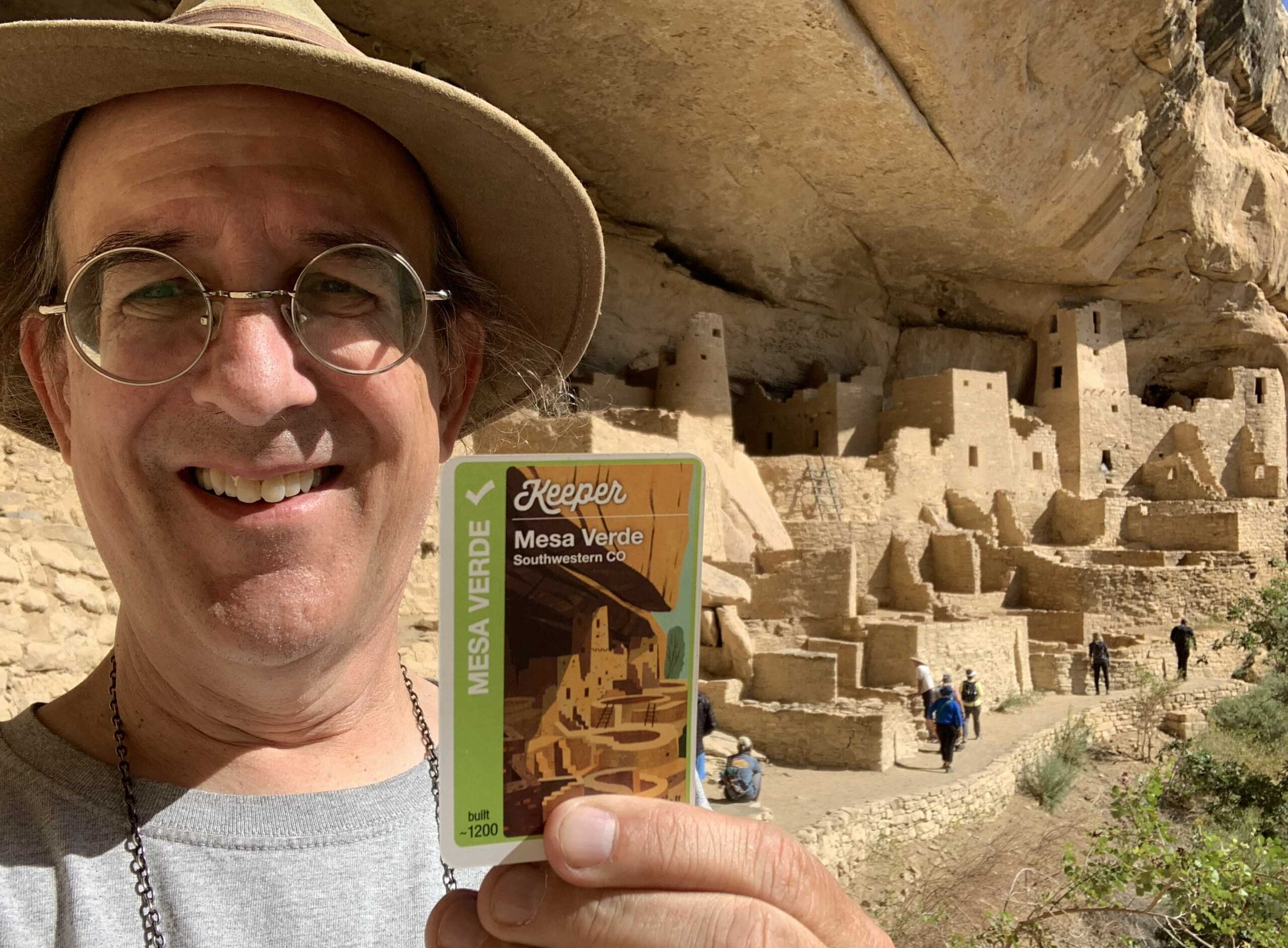
My youngest son and I have met and talked to Andy Looney, the designer of the Fluxx family of games, a few times at PAX East shows. One year he taught us Homeworlds, another year Time Breaker. So I was eager to interview him about card game design.
What’s your earliest memory of playing a card game?
As you might expect, games were big in my household growing up so they were always kind of there. I remember watching my older brothers play games and looking forward to being old enough to join in. I remember getting into Gin and Rummy early on, maybe it was one of those.
What’s the first dedicated-deck card game you fell in love with?
Rook.
What was the first card game you ever designed, and what did it teach you about the design process?
Wow, it seems hard to believe but I think that would be Fluxx. I had to be asked to make a card game — up until then, I was focused on board games, role-playing games, and computer games. What did I learn from it? Too much to even articulate.
Looney Labs embraced licensing, releasing many tie-in games like Monty Python Fluxx, Batman™ Fluxx, and Firefly Fluxx, but many of those licenses seem to have lapsed now. What can you tell us about the licensing process and your current strategy?
Licenses are a mixed bag. It’s fun to play in someone’s else’s “sandbox,” but there are SO many potential downsides. Sometimes it’s great — Monty Python Fluxx was our first one, and it’s been a total success. It’s become a classic, and it still sells well. On the other hand, Batman Fluxx was a struggle to create, with the licensors insisting on many changes I didn’t agree with; and even though it was a popular version, we can’t sell it anymore, because we’ve lost the rights (for reasons beyond our control). This is hugely disappointing since we try to keep everything we make in print forever. Lastly, of course, we have to pay for licenses, which means we have to charge more for licensed versions, yet the “power” of the licensed theme rarely seems to significantly increase sales. For all of these reasons, we tend to avoid making new licensed deals, focusing instead on parody and public domain themes. We only go after licenses now when it’s really compelling.


How many Fluxx variants are there now? Which is your favorite and why?
Dog Fluxx is the 48th unique edition of the game, although only 36 editions are currently in print. My favorite is Across America Fluxx. I love it because it’s one of the most beautiful versions we’ve ever made, but mostly because it inspired me to undertake the greatest road trip of my life, in which I visited every landmark in the game during an incredible 6-week trip around the country.
But the biggest reason it’s my favorite is that we rescued a kitten in the middle of nowhere Arizona.
I really love that cat, whom I’ve trained to ride on my shoulders.
If there was one thing you wish you’d known sooner about game design, what is it?
I’ve been trying to think of something wise or funny to say here but I can’t think of much. So I will say this: If you succeed, be prepared to spend way more time than you would ever have expected just reviewing the proofs for games you designed long ago but are being reprinted and need to be re-approved. I have three separate proofing tasks on my table today, only one of which is for a new game.
What other advice do you have for card-game designers?
Don’t expect for game-inventing to ever be more than a hobby. It’s a super competitive industry and although I myself am living the dream (doing this full-time), I am keenly aware of being the rare exception. Plan on getting and keeping a day job.
Anything you want to tease or promote?
I’ve got a brand new game called Seven Islands in production! It goes on sale June 30th!
But now, I have to go review those proofs. Thanks for the interview!
Photo credit: © 2023 Andy Looney. Used by permission.

